

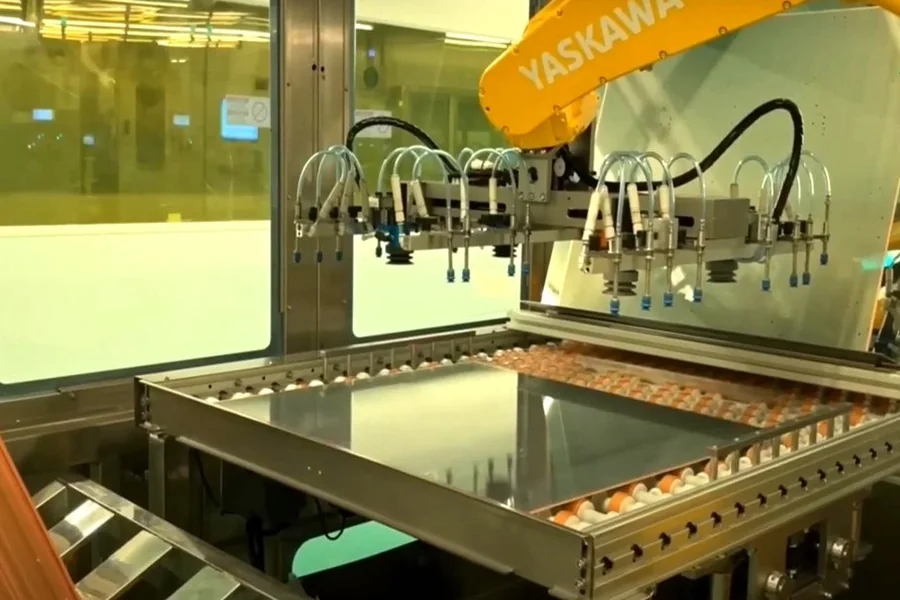
As electronic devices become more compact yet increasingly powerful, the need for advanced circuit board technology has grown. The multilayer circuit board has emerged as a crucial solution for meeting these modern demands. Unlike single-layer or double-layer PCBs, multilayer boards consist of three or more conductive copper layers stacked with insulating materials between them. This structure allows for higher density, improved performance, and greater functionality, making multilayer boards indispensable in industries such as telecommunications, computing, aerospace, automotive, and medical electronics.
What is a Multilayer Circuit Board?
A multilayer circuit board is a printed circuit board designed with multiple layers of copper traces that are separated by dielectric materials and laminated together into a single structure. Typically, these boards contain four, six, eight, or more layers, depending on the complexity of the design. The layers are interconnected through vias, which allow signals and power to travel across different planes of the board.
The compact and layered design enables engineers to accommodate complex circuits while saving space, making multilayer boards the preferred choice for advanced electronic applications where performance and miniaturization are critical.
Key Features of Multilayer Circuit Board
One of the most significant features of a multilayer circuit board is its ability to support high component density. This is achieved by stacking multiple conductive layers, allowing more connections in a smaller footprint.
Additionally, multilayer PCBs provide excellent signal integrity, reduced electromagnetic interference, and better power distribution. Their robust mechanical strength and durability also make them suitable for environments where reliability is essential.
Advantages of Multilayer Circuit Board
The multilayer circuit board offers several advantages over traditional single- or double-layer boards. First, the higher circuit density allows engineers to design complex devices without increasing the board size. This is particularly useful in compact devices such as smartphones, tablets, and wearables.
Second, multilayer boards enhance electrical performance by reducing signal loss and crosstalk. With carefully designed ground and power planes, they also provide improved impedance control and noise reduction. Furthermore, their durability ensures long-term stability, even in demanding applications like aerospace control systems and automotive electronics.
Applications of Multilayer Circuit Board
The multilayer circuit board is widely used across a variety of industries. In telecommunications, they power network servers, routers, and high-speed data processing equipment. In consumer electronics, they are essential for smartphones, laptops, and gaming consoles that require compact and efficient circuit layouts.
In the automotive sector, multilayer PCBs are integrated into advanced driver assistance systems (ADAS), infotainment units, and engine control systems. Aerospace and defense industries also rely on multilayer boards for radar systems, communication devices, and navigation controls where precision and reliability are critical. Additionally, the medical field uses these boards in diagnostic imaging systems, monitoring equipment, and portable medical devices.
Types of Multilayer Circuit Board
The multilayer circuit board comes in different variations based on construction and application requirements. Rigid multilayer PCBs are the most common and are used in devices that require structural strength. Flexible multilayer PCBs are built with bendable materials, enabling them to fit into irregular shapes or compact devices. Rigid-flex multilayer boards combine both technologies, offering flexibility in design while maintaining durability.
High-density interconnect (HDI) multilayer boards are another category that supports finer lines and smaller vias, making them suitable for applications where miniaturization and high performance are essential.
Manufacturing Process of Multilayer Circuit Board
The production of a multilayer circuit board is complex and involves multiple precise steps. It begins with creating the inner layers by etching the desired circuit pattern onto copper sheets. These layers are then laminated with insulating materials and pressed together with heat and pressure to form a solid board.
Vias are drilled to create electrical connections between layers, and plating is applied to ensure conductivity. The outer layers are patterned with copper traces, followed by the application of solder masks and surface finishes such as HASL (Hot Air Solder Leveling) or ENIG (Electroless Nickel Immersion Gold). Finally, thorough testing is conducted to ensure the multilayer PCB meets performance and reliability standards.
Design Considerations for Multilayer Circuit Board
Designing a multilayer circuit board requires careful planning to balance performance, cost, and manufacturability. Engineers must determine the optimal number of layers to accommodate the circuit’s complexity without making the board unnecessarily expensive. Signal integrity, thermal management, and power distribution must also be considered during the design process.
Proper layer stack-up is critical, as it influences impedance control and minimizes electromagnetic interference. Designers must also consider via placement, material selection, and copper thickness to achieve the desired balance of performance and durability.
Conclusion
The multilayer circuit board has become the backbone of modern electronics, enabling engineers to design powerful, compact, and reliable devices across diverse industries. With its superior circuit density, enhanced performance, and long-term stability, it continues to play an essential role in technological innovation. For businesses and engineers looking to achieve the best results, collaborating with an experienced multilayer circuit board manufacturer ensures high-quality production, precise engineering, and dependable performance tailored to your project’s needs.
